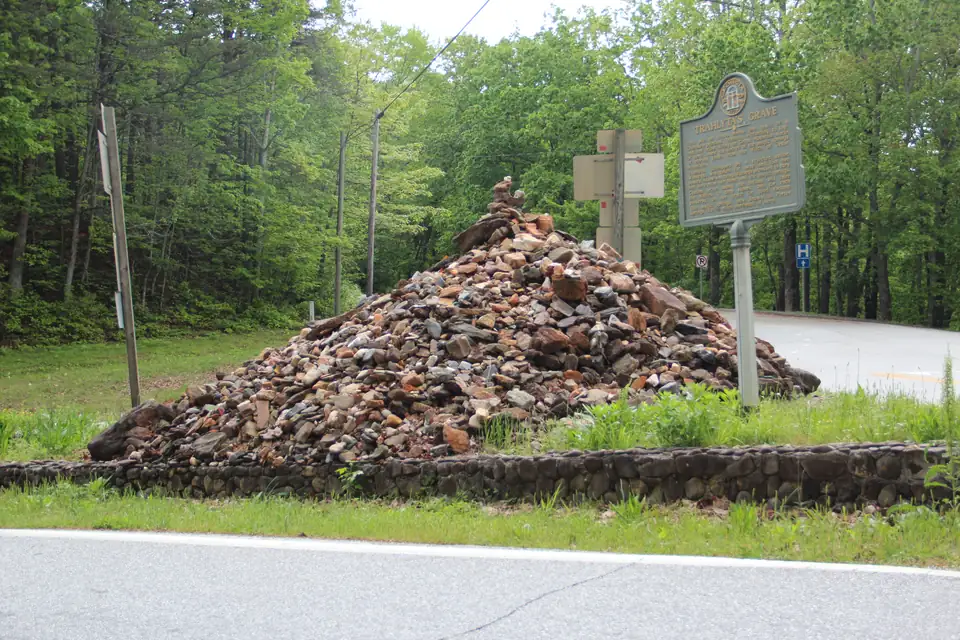
If there is a family cemetery on the land you are buying in Georgia, three things follow. The graves are not yours: Georgia law declares that human remains and burial objects are not property of the landowner (O.C.G.A. § 36-72-1). You cannot knowingly disturb a known cemetery to develop or change the use of the land without a permit. And descendants of the people buried there may have a right to visit, which Georgia DCA says comes from case law, not a statute. None of that has to stop a purchase. It does have to be found, mapped and understood before you close.
What Georgia law requires before graves are disturbed
The rule is O.C.G.A. § 36-72-4: “No known cemetery, burial ground, human remains, or burial object shall be knowingly disturbed by the owner or occupier of the land on which the cemetery or burial ground is located for the purposes of developing or changing the use of any part of such land unless a permit is first obtained” from the city or county governing authority (O.C.G.A. § 36-72-4).
Two parts of that wording are worth noticing. It turns on a known cemetery, so once a survey, a deed or a walk of the land turns up graves, the permit rule is in play for an owner or occupier planning work near them. And it reaches development or a change in the use of any part of the land, not only the burial plot itself. A driveway, a house site or a timber road can all raise the question.
Georgia DCA summarizes what the permit involves, including evidence of land ownership, an archaeologist’s report on the locations of all graves, and a survey by a registered land surveyor showing boundaries (Georgia DCA). In practice a cemetery affects where a house, driveway, pond or septic field can go, and what a later owner can do with that corner of the land. Ask Lumpkin County, or inside Dahlonega the city, which office takes cemetery permit applications before you plan any work near graves.
Descendants’ access: what DCA says
Georgia DCA states that “there is no specific statute that addresses right of entry to cemeteries on private property” (Georgia DCA). Instead, DCA says, case law in Georgia has been interpreted to mean that the heirs of those buried have an implied easement on the property, giving them “the right to prevent disturbance to the graves and the right of ingress and egress for taking care of the burial plots” (Georgia DCA).
Because that right comes from case law and not from a recorded document, it may not appear anywhere in the deed records. Expect that family members may come to tend graves, and ask your attorney how an implied easement could affect the route they use and your plans for the land. If the seller knows the families involved, ask how visits have worked.
What shows up in title, and what may not
| Source | What it can show |
|---|---|
| Deeds in the chain | A cemetery reserved or excepted from an earlier sale, sometimes with an access strip |
| Recorded plats | Observed evidence of burials, which Georgia’s survey standards require plats to show (Ga. Comp. R. and Regs. 180-7) |
| Your new survey | Graves, fences and markers located against the boundaries and planned improvements |
| Title commitment | A cemetery, reservation or easement listed among the Schedule B exceptions |
| Not in any record | Unmarked graves, and descendants’ implied access rights |
The commitment matters most. Schedule B, Part II lists the exceptions the policy will include unless they are cleared to the insurer’s satisfaction (2021 ALTA Commitment), and the final owner’s policy does not insure against the matters listed in its Schedule B (2021 ALTA Owner’s Policy). An excepted cemetery is a matter you take on with the land. A survey that does not look for burials can miss one entirely.
How to look for a cemetery before you buy
- Ask the seller and neighbors. They may know of graves that appear in no record.
- Read every deed in the chain for words like “cemetery,” “graveyard,” “burial ground” or a reserved plot, and pull every plat it cites. Our deed records guide shows how.
- Walk the land. Look for markers, old fences or anything that could be a grave, and note where it is.
- Tell your surveyor to look for and locate observed evidence of burials, which the standards already require a plat to show.
- Read the commitment for a cemetery exception and ask the closing attorney you choose what it means for your plans.
- Plan improvements away from graves, and if any work could disturb them, get the permit first.
If an archaeologist’s report or a permit is likely to be needed, that work takes time, so raise it before the end of any due diligence period in your contract, and ask your attorney how the contract handles it.
If you are the seller
Say what you know. A cemetery is easier to work around when the buyer learns about it from you and from the plat than when it turns up in the survey after a contract is signed. Tell your attorney before you list. Our seller guide sets out the order of work.
The statute-by-statute version of this topic is on family cemeteries on private land, and the other title issues that come with North Georgia land are on mountain land title issues. For surveys and what a plat must show, see surveys and boundaries.
Questions people ask
Do I own the graves on land I buy in Georgia?
No. Georgia law declares that human remains and burial objects are not property owned by the person or entity that owns the land where they are interred.
Source: O.C.G.A. § 36-72-1, checked Oct 19, 2026
Can I move or build over a family cemetery on my land?
Not without a permit. A known cemetery may not be knowingly disturbed to develop or change the use of the land unless a permit is first obtained from the city or county governing authority.
Source: O.C.G.A. § 36-72-4, checked Oct 19, 2026
Do descendants have a right to visit a cemetery on private land in Georgia?
Georgia DCA says no specific statute addresses it, but case law has been interpreted to give heirs of those buried an implied easement to prevent disturbance of the graves and to come and go to care for the plots.
Source: Georgia DCA, checked Oct 19, 2026
Will a survey show a cemetery on the land?
It should show what the surveyor observes: Georgia survey standards require plats to show observed evidence of human burials or cemeteries. Unmarked graves may not be visible, so walk the land and ask.
Source: Ga. Comp. R. & Regs. 180-7, checked Oct 19, 2026
Written by the Dahlonega Title Guide Editorial Team. AI tools help us draft; people check every fact against its source before it publishes.