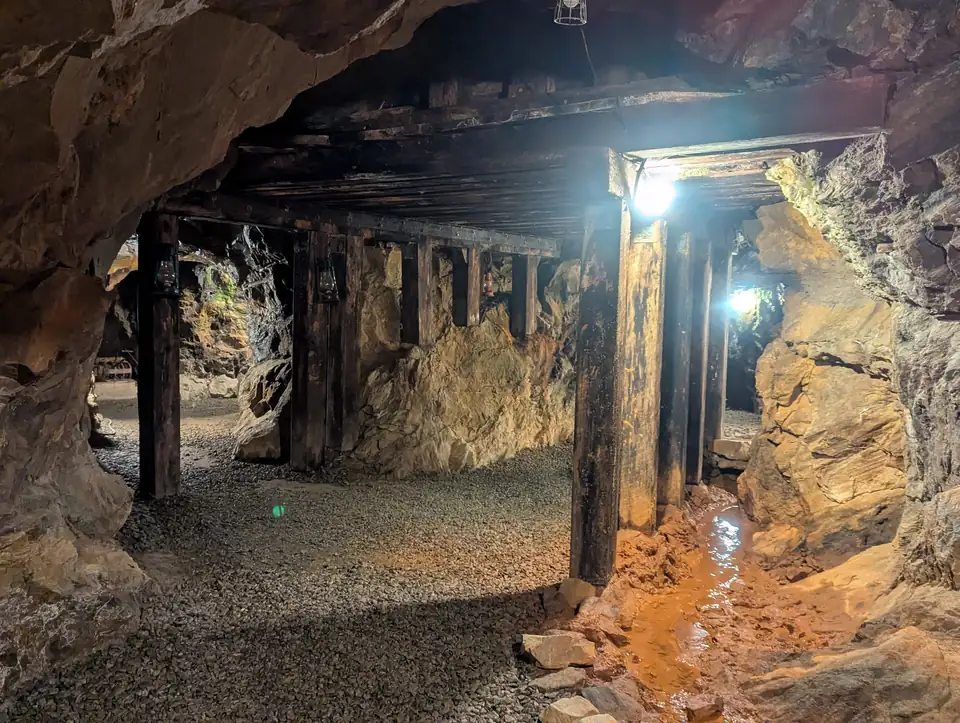
Mineral rights in Dahlonega, GA can be owned separately from the surface, and an old deed in a Lumpkin County chain of title may sell or reserve them. That possibility is a product of the county’s history: the 1832 survey laid much of the area out in 40-acre gold lots, and the gold rush that followed put a premium on what lay underground. Today a severed mineral interest is a title question like any other recorded interest. Georgia has a specific statute, O.C.G.A. § 44-5-168, that lets a surface owner ask the superior court for title to mineral rights that have gone unworked and untaxed for seven years (O.C.G.A. § 44-5-168).
The gold rush that shaped the land records
Lumpkin County and Dahlonega are known as the site of the country’s first major gold rush, which the New Georgia Encyclopedia’s county article says began in 1828 (New Georgia Encyclopedia). The same encyclopedia’s history of the rush finds no documented evidence of Georgia gold until August 1, 1829 (New Georgia Encyclopedia), so we write 1828-29. By 1832 the state was distributing the Cherokee land by lottery, and it treated the gold country differently from the rest.
| Gold lots | Land lots | |
|---|---|---|
| Size | 40 acres | 160 acres |
| Distributed by | The seventh land lottery, the Gold Lottery | The sixth land lottery |
| Share of the territory | About a third of the land districts, designated gold districts | The remaining districts |
| Drawing | October 22, 1832, to May 1, 1833 | Not stated in our source |
Sources: Georgia Archives on the 1832 Gold Lottery, the sixth and seventh lotteries and the drawing dates. The territory was divided into four sections with 33 gold districts, each divided into gold lots (Georgia Archives).
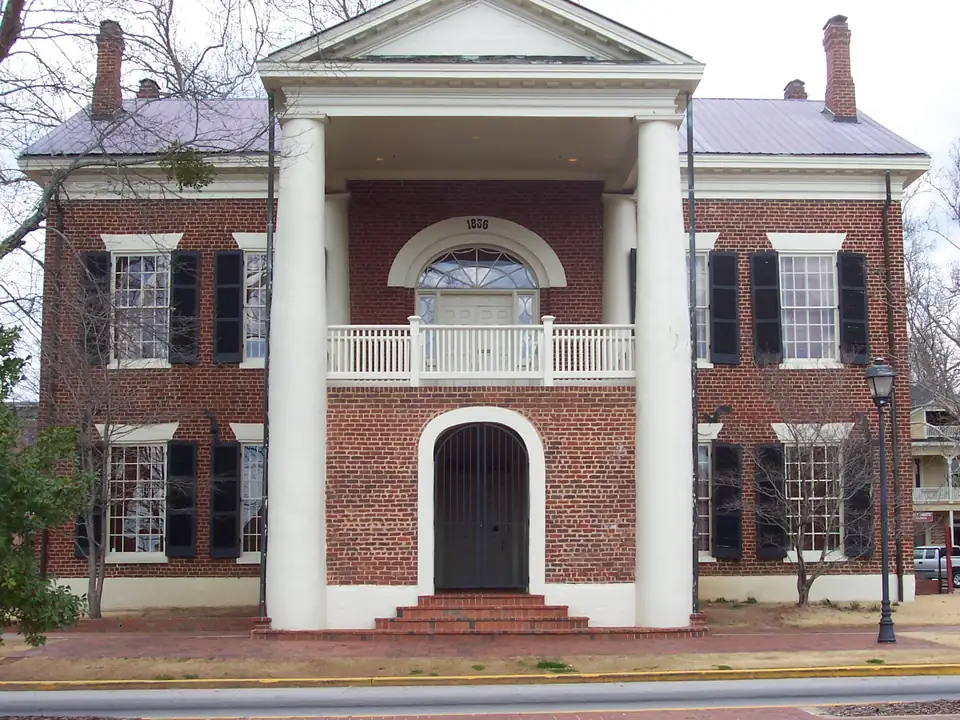
Lumpkin County was created by a law passed December 3, 1832, that divided original Cherokee County into ten counties (Georgia Archives); the county’s own history page says it was carved out of what were then Cherokee, Hall and Habersham counties (Lumpkin County). It was named for Governor Wilson Lumpkin (New Georgia Encyclopedia). The county seat, then called Licklog, became Dahlonega in 1833, from the Cherokee word talonega, meaning golden or yellow (New Georgia Encyclopedia). The federal Branch Mint at Dahlonega ran from 1838 to 1861 and produced almost 1.5 million gold coins (New Georgia Encyclopedia). The 1836 Lumpkin County Courthouse, one of the oldest courthouse buildings in Georgia, now houses the Dahlonega Gold Museum State Historic Site.
Dahlonega Gold Museum (1836 courthouse)
The 1836 Lumpkin County Courthouse, one of Georgia's oldest courthouse buildings, now a state historic site on America's first major gold rush.
1 Public Square, Dahlonega, GA 30533
Monday–Saturday 9 a.m.–4:45 p.m.; Sunday 10 a.m.–4:45 p.m.; Closed Thanksgiving, Christmas & New Year's Day.
Official page · Source: Georgia State Parks, checked Oct 19, 2026
Severed mineral rights: when someone else owns what is underneath
Ownership of land can be split horizontally. One person can own the surface while another owns the minerals below, usually because an earlier owner sold the minerals separately or kept them when selling the surface. Once a split like that is recorded, it is part of the chain of title, and the examiner will look for it in every deed back through the chain.
Georgia’s statute deals with the mineral owner who has gone quiet. Under O.C.G.A. § 44-5-168, when mineral rights are severed, the surface owner “may gain title to such mineral rights by adverse possession if the owner of the mineral rights or his heirs or assigns have neither worked nor attempted to work the mineral rights nor paid any taxes due on them for a period of seven years.” To get absolute title, the surface owner files a petition for a declaratory judgment in the superior court of the county where the land lies (O.C.G.A. § 44-5-168). The statute does not apply to a lease for a specific number of years, or to a mineral owner who has leased the rights in writing to a mining operator (O.C.G.A. § 44-5-168).
One version note: Justia’s 2025 Georgia Code labels the displayed text of the section effective July 1, 2026 (O.C.G.A. § 44-5-168). Whether the seven-year test is met on a given tract, and whether a petition makes sense, is a question for a Georgia real estate attorney. The broader menu of cures, including Georgia’s quiet-title actions, is on curing title problems.
How a mineral interest shows up in your title work
An examiner who finds a recorded mineral deed or reservation will report it. In the title commitment, Schedule B, Part II lists the exceptions the final policy will include unless they are cleared to the insurer’s satisfaction (2021 ALTA Commitment), and Schedule B of the 2021 ALTA Owner’s Policy lists the matters the policy does not insure against (2021 ALTA Owner’s Policy). ALTA publishes an endorsement titled “Restrictions, Encroachments, Minerals” for loan policies (Endorsement 9) (ALTA). Whether any endorsement is available on a particular policy, and what it would cover, is a question for the insurer and your attorney.
Questions to ask about mineral rights on Lumpkin County land
- Does any deed in the chain sell, reserve or except “minerals,” “mineral rights” or “mining rights”? Read the full text of each deed, not just the index entry.
- Was the tract drawn as a gold lot or a land lot in 1832? The Georgia Archives’ Gold Lottery records are the place to start.
- If the minerals were severed, has the mineral owner worked them, tried to work them or paid taxes on them in the last seven years?
- Is there a written mineral lease, and for how long does it run?
- Does the commitment list a mineral reservation as a Schedule B exception, and can it be cleared?
- Are there pits, shafts or tailings on the ground? We found no county source that maps old workings, so the land itself and the seller are the only sources.
The Risk Finder below turns these into a checklist with the record to check for each.
Decision tool · Title Risk Finder
Find the title checks your property needs
Pick who you are, the kind of property and what you already know about the land. You get the checks that apply, where each record lives and the rule behind it. No score and no advice: take the list to the closing attorney you choose.
Want help putting the list in order before you sign? Send it with a note and a licensed Gold Peach Realty agent will follow up.
Send my list with a noteMineral rights are one of several issues that come with North Georgia land; the mountain land title issues guide covers the rest. To trace a reservation back to its source, our legal description article and the deed records walkthrough show how to find the deeds.
Questions people ask
Can a surface owner get severed mineral rights back in Georgia?
Possibly. Under O.C.G.A. 44-5-168 the surface owner may gain title to severed mineral rights by adverse possession if the mineral owner has neither worked nor attempted to work them nor paid taxes on them for seven years.
Source: O.C.G.A. § 44-5-168, checked Oct 19, 2026
How does a surface owner claim unused mineral rights in Georgia?
By filing a petition for relief in the nature of a declaratory judgment in the superior court of the county where the land is located. A Georgia real estate attorney can say whether the statute's tests are met.
Source: O.C.G.A. § 44-5-168, checked Oct 19, 2026
Does the seven-year mineral rule apply to leased minerals?
No. The statute does not apply to a lease for a specific number of years, or to a mineral owner who has leased the rights in writing to a mining operator.
Source: O.C.G.A. § 44-5-168, checked Oct 19, 2026
What was the 1832 Gold Lottery?
A separate state lottery for the gold country of the former Cherokee territory. About a third of the land districts were designated gold districts of 40-acre lots, distributed apart from the 160-acre land lots.
Source: Georgia Archives, checked Oct 19, 2026
When was gold discovered near Dahlonega?
Accounts of the rush date it to 1828, but the New Georgia Encyclopedia's history of the Georgia gold rush finds no documented evidence of gold in Georgia until August 1, 1829. That is why this guide writes 1828-29.
Source: New Georgia Encyclopedia, checked Oct 19, 2026
When did the Dahlonega Mint operate?
The federal Branch Mint at Dahlonega operated from 1838 to 1861 and produced almost 1.5 million gold coins.
Source: New Georgia Encyclopedia, checked Oct 19, 2026