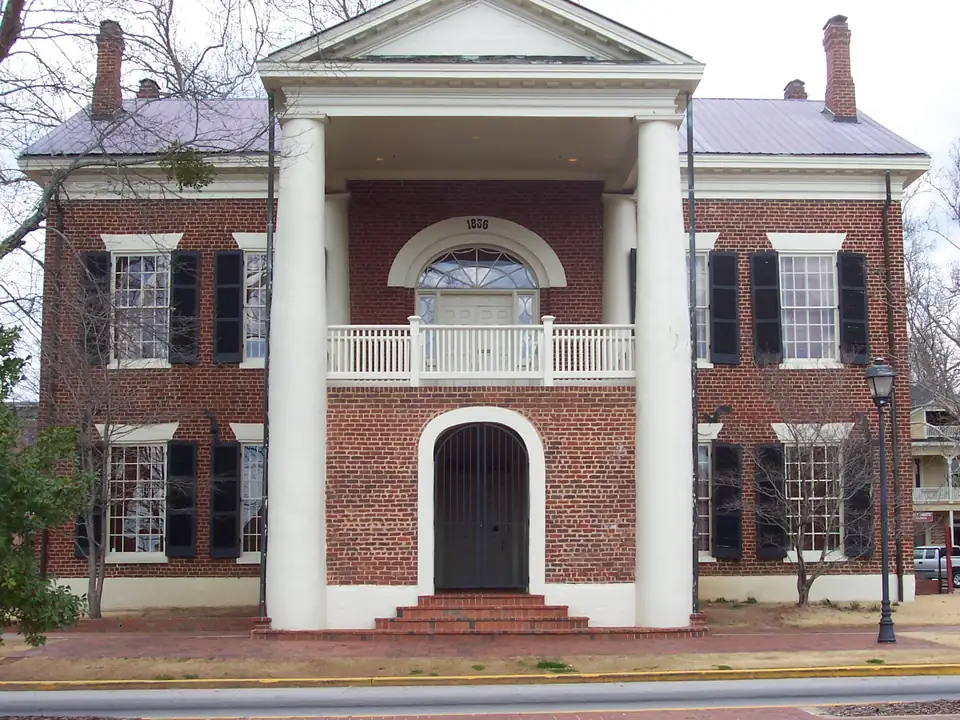
A title search answers two questions: does the seller own the land, and what else is recorded against it? In Lumpkin County the work starts in the real estate records of the Clerk of Superior Court, because Georgia law requires every deed conveying land to be recorded with the clerk of superior court in the county where the land is located (O.C.G.A. § 44-2-1). From there the search reaches into the lien and plat dockets, the Probate Court’s estate files and the Tax Commissioner’s records. You can search the indexes yourself; only an attorney may give a legal opinion on what they show.
What a title search covers
The examiner builds the chain of title, deed by deed, from the current owner back through earlier owners, and checks each link for gaps, name changes and defects. Along the way the examiner looks for every recorded document that limits or burdens the land:
- Deeds. Warranty deeds, quitclaim deeds, deeds of assent out of estates and corrective deeds. An earlier deed that was never recorded can lose its priority to a later recorded deed from the same seller if the later buyer had no notice of it (O.C.G.A. § 44-2-1).
- Security deeds. Georgia’s loan instrument. A deed to secure debt passes title to the lender until the debt is paid (O.C.G.A. § 44-14-60), so each one in the chain needs a recorded cancellation or another explanation.
- Liens. State and federal tax liens, county tax fi.fas, mechanics’ and materialmen’s liens and property owners’ association assessment liens.
- Judgments. A judgment binds the defendant’s property, but against a good-faith buyer without notice a money judgment is not a lien until the execution is entered on the general execution docket (O.C.G.A. § 9-12-81).
- Lis pendens. A lawsuit over Georgia land works as notice to buyers only after a notice of the action is filed with the clerk of superior court where the land lies (O.C.G.A. § 44-14-610).
- Easements and covenants. Rights of way, utility easements, road maintenance agreements and subdivision restrictions.
- Plats. Recorded surveys showing boundaries and easements. Georgia’s technical standards also require plats to show observed evidence of human burials or cemeteries (Ga. Comp. R. & Regs. 180-7).
- Estates. When an owner in the chain died, whether an estate was opened and the land passed by a recorded deed of assent.
- Taxes. Whether current and past property taxes are paid.
Where each record lives in Lumpkin County
| Record | Office that keeps it | How to search it |
|---|---|---|
| Deeds, security deeds, easements, covenants | Clerk of Superior Court, 325 Riley Road, Room 108 | GSCCCA real estate index, which covers all counties since at least January 1, 1999 (GSCCCA); older books at the Clerk’s office |
| Tax liens, mechanics’ liens and other non-UCC liens | Clerk of Superior Court | GSCCCA lien index, since at least January 1, 2004 (GSCCCA) |
| Plats | Clerk of Superior Court, after planning approval | GSCCCA plat index, since at least January 1, 2004 (GSCCCA) |
| Lis pendens notices | Clerk of Superior Court | The Clerk’s records; ask the office how a notice is indexed |
| Judgment executions | General execution docket | Ask the Clerk’s office how to search it |
| Wills, estates, letters of administration | Probate Court, 325 Riley Road, Room 122 | By phone or in person, 706-864-3847 (Lumpkin County Probate) |
| Parcel number, owner of record, maps | Tax Assessor, 99 Courthouse Hill, Suite C | qPublic, the county’s online parcel search (Lumpkin County) |
| Property tax bills and delinquent taxes | Tax Commissioner, 99 Courthouse Hill, Suite E | The Tax Commissioner’s office; taxes unpaid more than 90 days after the due date can become a recorded tax fi.fa. (Lumpkin Tax Commissioner) |
Not sure where to start? Tell the Records Path what you already know about the property and what you want to find, and it points you to the index or office.
Decision tool · Records Path
Plan your Lumpkin County records search
Pick what you already have and what you want to find. You get the order to search, where each record lives and the link to start.
A street address → Who owns it and the chain of deeds
Find the parcel on the county's parcel map
Search Lumpkin County's online parcel map and ownership records by address, owner name or parcel number. Note the owner of record and the parcel number for the next steps.
Where: Lumpkin County Tax Assessor: online on qPublic; a public mapping computer at the Assessor's office prints aerial maps
Open qPublic for Lumpkin County
Source: Lumpkin County
Choose a GSCCCA account for the statewide indexes
GSCCCA puts every county's deed, lien and plat indexes online. A Single-Use account is one four-hour session for a one-time fee; Regular and Premium accounts are monthly. The prices are on the source page.
Where: GSCCCA (online)
Source: GSCCCA
Search the deed index by name, owner to owner
Search each owner's name in the deed index to find the deed into them, then the deed into the owner before, building the chain of title back in time.
Where: GSCCCA real estate index (all counties from at least 1999)
Source: GSCCCA
Go to the deed room for older records
The online indexes were re-created from images for older years, and the Clerk's own index is official where they differ. For deeds before the online index, search the books at the Clerk's office.
Where: Lumpkin County Clerk of Superior Court
Source: GSCCCA
Take what you found to an attorney
Anyone may search the records, but only a Georgia attorney may give a legal opinion on the status of title. Bring your notes, book and page numbers and copies.
Source: O.C.G.A. § 15-19-53
Found something in the records you want a second opinion on? Send it with a note.
Ask about a recordHow far back does a title search go?
No Georgia statute we found sets one search period for every sale. How far back an examiner goes depends on the examiner and on the underwriter that will issue the policy. One local reference point: when Lumpkin County considers taking a private road into the county road system, its application asks for a title opinion and a “Standard State Bar 50-year Title Standards Certificate” (Lumpkin County).
A few statutory time limits shape what an examiner worries about. Title conveyed by a Georgia security deed reverts to the borrower seven years after the maturity of the debt stated in the record, with other periods in some cases (O.C.G.A. § 44-14-80). A judgment goes dormant when seven years pass without the required docket entries or public efforts to enforce it (O.C.G.A. § 9-12-60).
Can you do a title search yourself?
Yes. Each county keeps the official deed, lien and plat dockets, and GSCCCA gives internet access to them (GSCCCA). Viewing document images takes an account; the cheapest published option is a Single-Use account, one four-hour session for a one-time $5.00 fee plus $0.50 per printed page (GSCCCA). The full price list and a step-by-step walkthrough are on our Lumpkin County deed records page.
One caution: GSCCCA says its historical indexes were re-created from document images, and where they differ from the Clerk’s index, the Clerk’s index is the official one (GSCCCA terms of use).
What a professional examination adds
Georgia separates searching from judging. The statute on the practice of law does not stop anyone from examining the record of titles, and non-lawyers may issue abstracts and title insurance (O.C.G.A. § 15-19-53). But it reserves to attorneys any legal opinion on the status of title, and Georgia defines the practice of law to include “the rendering of opinions as to the validity or invalidity of titles to real or personal property” (O.C.G.A. § 15-19-50).
So a do-it-yourself search tells you what is recorded. An attorney’s title certificate or opinion tells you what those records mean for this title, which instruments must be cleared and how. If a decision turns on what a record means, ask a Georgia real estate attorney.
The search is not the policy
A search and an attorney’s opinion look backward at the records. Title insurance is a contract that pays covered losses. The title commitment that follows a search calls itself “an offer to issue one or more title insurance policies” and says it is not an abstract, a report or an opinion of title (2021 ALTA Commitment). The 2021 ALTA Owner’s Policy covers some risks no search can see, such as defects caused by forgery, fraud or impersonation (2021 ALTA Owner’s Policy), and lists in Schedule B the matters it does not insure.
How the two policies differ is on our owner’s vs lender’s title insurance page, and what each requirement and exception in a commitment means is on title commitments explained. If the search turns up a lien, liens and judgments explains each kind. To see which checks your property needs, run the Title Risk Finder. Closing costs and the transfer tax are covered on our sister guide to Dahlonega closings.
Questions people ask
Can I do a title search myself in Georgia?
Yes. Each county keeps its official deed, lien and plat dockets, and GSCCCA provides internet access to them, so anyone can search the indexes. Viewing document images takes a GSCCCA account, and judging what the records mean for the title is a job for a Georgia attorney.
Source: GSCCCA, checked Oct 19, 2026
How far back does a title search go in Georgia?
No single period applies to every sale; it depends on the examiner and the underwriter. As one local reference point, Lumpkin County's application for accepting a private road into the county system asks for a Standard State Bar 50-year Title Standards Certificate.
Source: Lumpkin County, checked Oct 19, 2026
Who can give a title opinion in Georgia?
Only an attorney at law may express or issue a legal opinion on the status of title to property in Georgia. Non-lawyers may search the records and issue title insurance, but not a title opinion.
Source: O.C.G.A. § 15-19-53, checked Oct 19, 2026
Are deeds public record in Georgia?
Yes. The clerk of superior court in each county files, indexes and permanently records deeds, mortgages, liens, plats and state tax executions, and those records are open to search.
Source: O.C.G.A. § 44-2-2, checked Oct 19, 2026
How much does a title search cost?
This guide does not quote examination fees, which are set by whoever does the work, so ask for them in writing. The published cost is for searching yourself: GSCCCA sells a Single-Use account for one four-hour session of statewide index access, plus a per-page print charge.
Source: GSCCCA, checked Oct 19, 2026
Does a title search show unpaid property taxes in Lumpkin County?
It can. Lumpkin County taxes unpaid more than 90 days after the due date are subject to a tax fi.fa. recorded in the Clerk of Superior Court's office, which puts them in the public record. Check current-year taxes with the Tax Commissioner.
Source: Lumpkin Tax Commissioner, checked Oct 19, 2026